
The total market capitalisation of BSE-listed companies had gained Rs 26.79 lakh crore to Rs 1,21,54,525 crore during 2016-17 fiscal.

India's services sector growth quickened in June from May's five-month low, amid a stronger rise in new orders and an unprecedented expansion in international sales, a monthly survey said on Wednesday. The seasonally adjusted HSBC India Services Business Activity Index rose from 60.2 in May to 60.5 in June, pointing to a sharp expansion in output. In the Purchasing Managers' Index (PMI) parlance, a print above 50 means expansion, while a score below 50 denotes contraction.

Thakur said no expenditure was incurred on advertisements in foreign media through the Ministry of Information and Broadcasting.

In 2012-13, the Centre managed to cut fiscal deficit to 4.9% of GDP, lower than the Budget revised estimates of 5.2%

'We have essentially tried to set out an agenda for the next five years and it, in essence, represents the political commitment to that agenda.'

India's manufacturing sector activity moderated in April, but still recorded the second fastest improvement in operating conditions in three-and-a-half years supported by buoyant demand, a monthly survey said on Thursday.

The avoidable stresses and strains in ties helped in one way. It showed for the entire region how a matured India handled diplomatic relations, especially with a smaller and suspicious neighbour, with practised dignity and patience, unruffled by provocations in word, deed and action, observes N Sathiya Moorthy.

Finance Minister Nirmala Sitharaman's Budget proposals lay out a comprehensive road map for transforming India into a developed nation, focusing on key priorities that aim to generate ample opportunities for all citizens in "Viksit Bharat". It sets the stage for sustained economic growth, social development, and technological advancement.

A continued focus on low inflation will be important to keeping gold imports, IMF said.
'We now look at divestment as an opportunity for maximising the value of public assets, not necessarily as a short-term resource-raising measure.'
'A sum of Rs 6,000 a year is very significant for a small farmer whose land holding is very small and whose produce is very small. All these calculations on a daily basis are extremely unfortunate and an insult to farmers.'
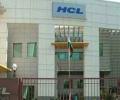
IT services company HCLTech on Friday posted a 20.4 per cent rise in consolidated net profit to Rs 4,257 crore for the June-ended quarter and gave a revenue growth guidance of 3-5 per cent for FY25 on GenAI diversification and strong operational execution. For the fiscal's first quarter ended June 2024 (Q1 FY25), the revenue came in at Rs 28,057 crore, 6.6 per cent more than in the year-ago period. Seen sequentially, it was 1.6 per cent lower than the March quarter.
'The quality of a leader should be such that even if the leader is not there, the institution carries on.'

The RBI said that strong signs of fiscal consolidation are necessary to create a space for lowering policy rate without the risk of resurgent inflation.

Megha Engineering and Infrastructure, the little-known Hyderabad-based firm that in recent years won the prestigious Zojila tunnel deal among other projects, forayed into city gas and acquired a media group, was the second largest donor to political parties using electoral bonds.

Stronger fiscal surveillance should be accompanied with broader macroeconomic surveillance, to go to the roots of sustainable growth.

'The BJP's numbers in this government are almost the same as those enjoyed by the Congress under P V Narasimha Rao when the reform process was kicked off in 1991.' 'As before, the only constraints on the prime minister's actions are internal, not external.' 'They come from his own assessment of the political consequences of any action,' points out Mihir S Sharma.

The Indian Navy has deployed a range of its frontline warships and submarines in the Indian Ocean region to send a clear message to China following the escalation of the border dispute in eastern Ladakh.

What might be useful is targeted assistance to those sectors and individuals that are disproportionately affected, suggests Mihir S Sharma.

India's services sector growth eased slightly in April but growth of new business and output remained sharp and among the fastest in 14 years amid favourable economic conditions and strong demand, a monthly survey said on Monday. The seasonally adjusted HSBC India Services Business Activity Index fell from 61.2 in March to 60.8 in April, highlighting one of the strongest growth rates seen in just under 14 years. Survey members attributed the latest upturn in output to favourable economic conditions, demand strength and rising intakes of new work.

The fresh meat and seafood delivery startup Licious plans to set up 500 stores nationwide within the next five years as part of an omnichannel strategy. The aim is to attract new users in the offline channel and encourage them to transact online as well. The move would also help the company in its efforts to achieve profitability and go for an initial public offering (IPO) in the next 24 months, according to the sources.

Prominent Indian-American politician Nikki Haley launched her presidential campaign on Tuesday, becoming the first Republican to challenge former US President Donald Trump in his 2024 bid for the White House.

Moody's Investors Service, while silent on the sovereign rating on the higher-than-expected fiscal deficit numbers, expressed doubts over attaining the higher revenue targets and divestment realisation as assumed in the Budget. The Union Budget 2021-22 has pegged a fiscal deficit of 9.5 per cent for the current financial year as against the consensus 7 per cent, and 6.8 per cent for 2021-22 with a market borrowing of around Rs 12 lakh crore. It also assumes Rs 1.75 lakh crore to be scooped up from divestment.

Member of Parliament Rajeev Chandrasekhar feels that the economy today is bankrupt due to big spending towards social welfare programmes such as NREGA.

Reliance Industries Ltd, India's most valuable company, on Friday reported a 5 per cent drop in its June quarter net profit as lower fuel cracks and petrochemical margins outdid gains in telecom and retail businesses. The oil-to-retail-to-telecom conglomerate's consolidated net profit was at Rs 15,138 crore, or Rs 22.37 per share, in April-June -- the first quarter of the current 2023-24 fiscal year -- compared to Rs 16,011 crore, or Rs 23.66 a share, earnings a year back, according to a company's statement.

The ministry sought to allay the rating agency's concerns and said economic growth was on an upward swing.

Chidambaram's comments come in the backdrop of lukewarm response to the 2G spectrum auction which could fetch the government only Rs 9,407 crore (Rs 94.07 billion) as against the target of Rs 40,000 crore (Rs 400 billion).
Three policymakers aware of the central bank's deliberations on the Budget said they are combing through the numbers to test how Jaitley struck a balance, and question some of the assumptions.

Shigeru Ishiba is expected to prioritise strengthening Japan's military capabilities and fostering deeper international partnerships, particularly with India, with whom Japan shares significant strategic interests, explains Dr Rajaram Panda.

Diesel price should be freed, open market grain purchases should be ended.

About 56 million Indians may have plunged into extreme poverty in 2020 as a result of the pandemic, increasing the global tally by 71 million and making it the worst year for poverty reduction since World War II, according to fresh estimates by the World Bank. "The global goal of ending extreme poverty by 2030 is likely to be missed: By then, about 600 million people will remain in abject poverty. A major course correction is needed," Indermit Gill, chief economist at the World Bank, tweeted. The World Bank in its latest "Poverty and Shared Prosperity" made fresh estimates of poverty using a new extreme poverty line based on the purchasing power parity (PPP) of $2.15, the earlier one being at $1.9.

The Reserve Bank of India (RBI) lowered its policy repo rate by 25 basis points to 7.5 percent on Wednesday.

Global rating agency Moody's on Monday raised India's growth forecast for 2024 calendar year to 6.8 per cent, from 6.1 per cent estimated earlier, on the back of 'stronger-than-expected' economic data of 2023 and fading global economic headwinds. India's real GDP expanded 8.4 per cent year-over-year in the fourth quarter of calendar year 2023, resulting in a 7.7 per cent growth for full-year 2023. Capital spending by the government and strong manufacturing activity have meaningfully contributed to the robust growth outcomes in 2023, Moody's Investors Service said.

The ruling Bharatiya Janata Party in poll-bound Karnataka on Friday sought to woo farmers, women and younger generation with a slew of welfare measures in its last budget in the current term, also earmarking Rs 1000 crore towards development and renovation of various temples and maths in the state.

'They think quick fixes like internship in the private sector will help. 'In fact, internships have been going on for the last one decade.' 'In 2014-2015 itself, we had a ministry of skill development. None of the programmes have yielded results, still they are continuing with such schemes under some other name.' 'We don't see any seriousness on the part of the government to attack the problem of unemployment.'

National security advisor Ajit Doval on Friday suggested that various central armed police forces of the country should have "jointness" and interoperability among themselves like the ongoing plan for the defence forces.

The Finance Commission, which makes recommendations on sharing of tax revenues by the Centre and States, has suggested a new path for fiscal prudence in its report submitted to President Pratibha Patil on Wednesday.

Edtech major Think and Learn, which operates under Byju's brand name, is learnt to have received a commitment of $300 million from investors for its ongoing rights issue which will close by the end of February, sources aware of the development said. Byju's floated a rights issue in January to raise $200 million at an enterprise valuation in the range of $220-250 million which is a 99 per cent reduction in its peak valuation of $22 billion. Sources also shared that Byju's has offered miffed investors to appoint two independent directors to enhance transparency but only after the rights issue and declaring its financial results for the 2023 fiscal.
The fiscal deficit was 4.9 per cent of GDP in 2012-13.

Delhi Finance Minister Atishi on Monday announced the 'Mukhyamantri Mahila Samman Yojana' for the 2024-25 fiscal, under which Rs 1,000 will be given monthly to women aged above 18 from the fiscal year 2024-25.
